



:quality(85):upscale()/2025/12/23/875/n/1922153/4d93cc1a694af4ff384d40.69956191_.jpg)
:quality(85):upscale()/2025/07/29/744/n/1922153/914c74a56888fc379da311.47237459_.png)
:quality(85):upscale()/2025/12/22/282/n/1922153/432a4882694a2cc8df4c25.86094289_.png)
:quality(85):upscale()/2025/12/22/907/n/49352476/1ef1062c6949ae5969bee1.84802426_.png)










Forget OpenVPN, WireGuard: This is the VPN protocol of the future


VPN providers and internet censors are locked in constant battle, with success often determined by whoever develops new techniques first.
The best VPN services understand this and are increasingly investing in censorship-resistant technology to stay ahead. For NordVPN, 2025 was a defining year. The company launched its "revolutionary" NordWhisper protocol in January, specifically designed to bypass strict network filters.
NordVPN CTO Marijus Briedis told TechRadar that censors now have "bigger and better technologies" to detect protocols, making the evolution of the "classical" VPN inevitable. NordVPN aims to be the first to transition, ensuring its tools remain effective in the world’s most highly restricted digital environments.
Where is NordWhisper at right now?
NordWhisper was launched with a simple, yet challenging, mission – bypass network restrictions without sacrificing the smooth browsing experience users expect. To do this, it had to move beyond standard obfuscation.
Unlike the likes of OpenVPN and WireGuard, NordWhisper uses the innovative web tunnel technology, which is designed to mimic normal web traffic.
This method, originally championed by experts at the Tor Project, encapsulates data within standard HTTP packets. By mimicking regular web traffic, NordWhisper creates a hidden tunnel that blends in with everyday internet activity, making it nearly invisible to the firewalls that typically flag and block VPN signatures.
At the moment, the provider suggests using NordWhisper while in restricted environments, as the additional layers of disguise can lead to slightly slower connection speeds.
It also lacks compatibility with some additional features, including Dedicated IP, Meshnet, and Onion Over VPN. However, the protocol’s footprint is expanding rapidly. Originally limited to Windows, Android, and Linux, NordWhisper is now available for iPhone and Mac users as well.
Another major milestone arrived in August with the introduction of Encrypted Client Hello (ECH).
This privacy-preserving protocol fixes a long-standing vulnerability in the TLS handshake – the initial "greeting" between a device and a server. ECH prevents "intermediaries from seeing which specific service a client is connecting to while maintaining the outer connection to the hosting provider," Bredis explained.
When we discuss privacy and bypassing censorship, we typically focus on the content of our messages or the websites we visit. However, every digital interaction leaves behind a trail of metadata.
Metadata refers to all the details that aren't the content, such as IP addresses, location, timestamps, and data packets. The primary issue with metadata is that users have almost no control over it. And AI-enabled surveillance is making it worse.
Modern censorship tools now use machine learning to analyze these tiny digital footprints, identifying VPN usage not by looking at the encrypted data itself, but by spotting the patterns and behaviors unique to VPN protocols. That's why a very small number of VPN providers have started to develop new technologies that can also enhance metadata privacy.
Do you know?
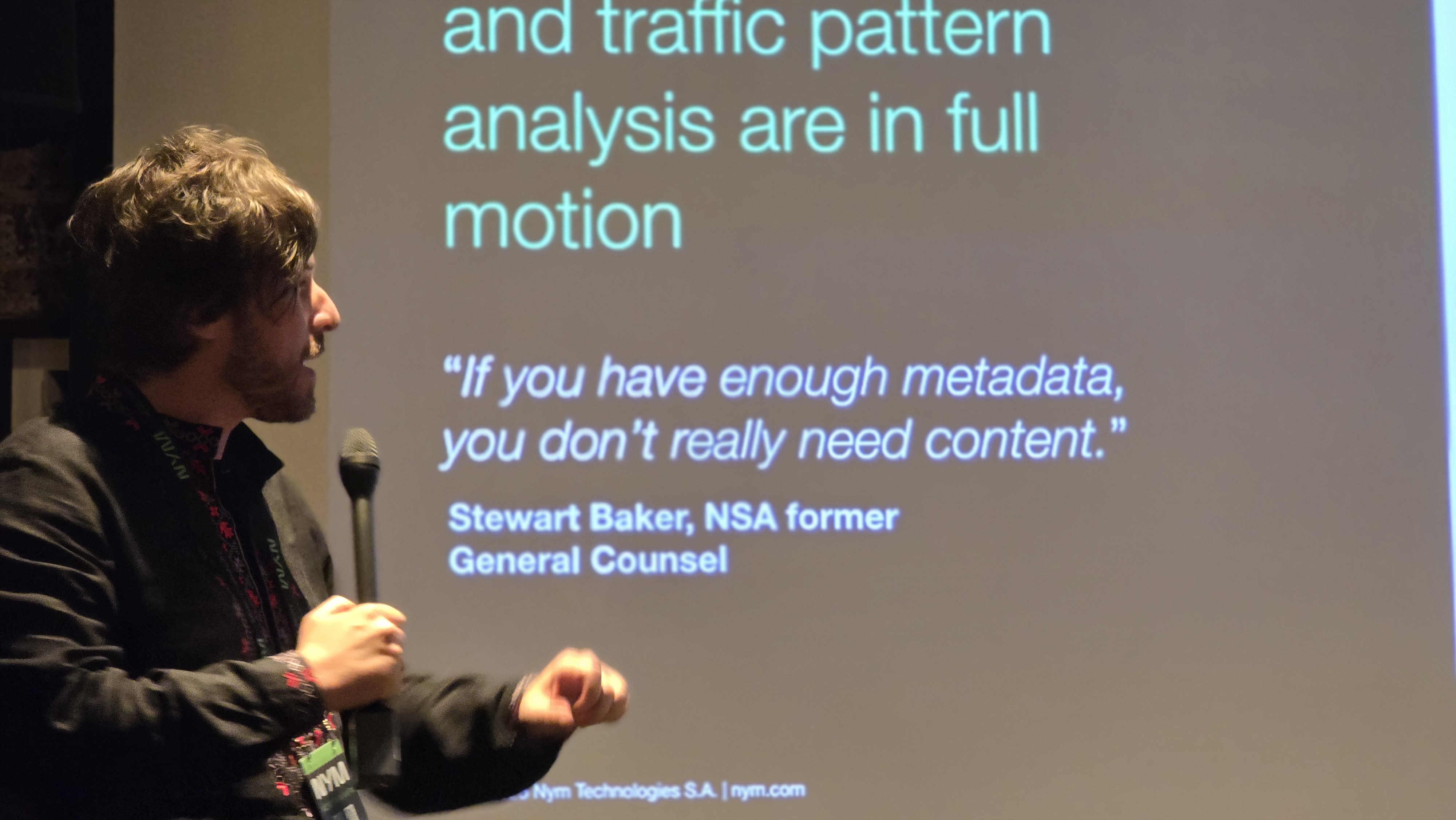
NymVPN was one of the first providers to understand the need for metadata privacy when it launched in March 2025. The company built a first-of-its-kind infrastructure known as Mixnet. It adds noise, covers traffic, and mixes data packets to evade metadata tracking. Mullvad VPN has also developed its DAITA system with a similar goal.
"Level 2 encryption for us was adding the ECH technology. So, observers can now only see that the cryptographic process happened to a certain IP," said Briedis.
However, not everything is hidden. Data packet sizes and data patterns can still be tracked, which gives important information to potential snoopers.
To counter this, Nord's developers are currently building capabilities that allow the protocol to "play with packets" at both the network encryption and connection layers.
If successful, this would make connection metadata almost useless to an outside observer. Briedis suggests that this system could even provide a defense against browser fingerprinting – a notorious tracking method that identifies users based on their unique browser and device settings, a threat that even many of the most secure VPNs cannot mitigate.
"They're going to see where you're connecting, like your IP address, because that's the basic scenario. But, besides that, it's going to be just encrypted data," confirmed Briedis.
A TLS-based future
The team working on NordWhisper has been busy this year, and 2026 shows no signs of slowing down.
There are two primary developments to watch for on this front. First is the release of adaptive obfuscation, a technique that dynamically adjusts encryption and communication patterns to mimic legitimate, local network traffic in real-time.
Then, following in the footsteps of Mullvad, NordVPN is also preparing to integrate the QUIC protocol into NordWhisper. "Cloudflare is pushing really hard right now on QUIC for the next version of the TLS-based encryption because it's better, quicker" said Briedis. "It makes sense for us to implement QUIC into the TLS-based process."
A fully TLS-based VPN is the ultimate goal for NordVPN, and where the company believes the future of censorship resistance lies. "TLS-based VPNs mean the evasion of DPI (Deep Packet Inspection) and restricted networks," Briedis explained.
As internet restrictions tighten globally – whether through authoritarian regimes blocking apps during unrest or democracies enforcing new content rules – reliable, censorship-resistant VPNs will become increasingly vital. Today’s solutions may not be up to the challenge for much longer, but NordVPN is working to stay ahead of the curve. We will be watching the rollout closely; you should, too.
Follow TechRadar on Google News and add us as a preferred source to get our expert news, reviews, and opinion in your feeds. Make sure to click the Follow button!
Chiara is a multimedia journalist committed to covering stories to help promote the rights and denounce the abuses of the digital side of life – wherever cybersecurity, markets, and politics tangle up. She believes an open, uncensored, and private internet is a basic human need and wants to use her knowledge of VPNs to help readers take back control. She writes news, interviews, and analysis on data privacy, online censorship, digital rights, tech policies, and security software, with a special focus on VPNs, for TechRadar and TechRadar Pro. Got a story, tip-off, or something tech-interesting to say? Reach out to [email protected]
You must confirm your public display name before commenting
Please logout and then login again, you will then be prompted to enter your display name.
What's Your Reaction?
 Like
0
Like
0
 Dislike
0
Dislike
0
 Love
0
Love
0
 Funny
0
Funny
0
 Angry
0
Angry
0
 Sad
0
Sad
0
 Wow
0
Wow
0